
Trending
This story is from January 14, 2018
Coppersmiths look to train people to ensure survival of their craft
In a quest to keep the art and technique of copper craft alive, traditional coppersmiths from Tambat Ali in Pune are willing to train anyone interested in learning the art form.
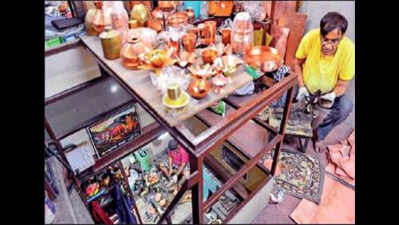
Coppersmiths at work in their workshop.
The depleting numbers have prompted the coppersmiths to train anyone interested, rather than passing the skills to the younger members of their own families.

Bhalchandra Kadu, a coppersmith from Tambat Ali, is set to launch a school to teach the craft. "I am the seventh generation member of my family to be engaged in manufacturing metal items. However, the next generation is not keen on carrying on because of the poor margins. I have gone to Yale and Arizona University in the US to teach this craft. The students there are interested in learning copper craft. But that is not the case in India," he said. He, however, added that copper is slowly regaining its old glory. "Copper is being used in architecture and interior decoration. The industry may bounce back, but there may not be enough coppersmiths to meet the demand," he warned.
Harshali Potphode, the owner of Om Sai Articles, agrees. "This is a labour-intensive job with low margins. Though there is a spike in demand for copper items, the number of coppersmiths is depleting," she said. Speaking about the heritage of the market, Potphode said, "The copper market dates back to the era of Chhatrapati Shivaji, when there were nearly 200 workshops. Back in the day, people mainly used copper utensils, so the business flourished. However, now people have moved to steel and glass utensils. People today buy only copper gift and decorative items."
Kadu, who is writing a book on copper craft, added, "The advent of machines has done away with techniques like 'mathar kaam' or hand embossing. I am writing a book that will detail how each instrument is used to make copper articles. The book will serve as course material in the school that I plan to start," he said.
End of Article
FOLLOW US ON SOCIAL MEDIA








Photostories

Hot Picks
TOP TRENDING
Popular Categories
Hot on the Web
Top Trends
Hurricane Milton LiveRatan Tata NewsNew UPI Transaction LimitRatan Tata DiesPM ModiWorld First Top 10 TrillionairesTom BradyStock Market TodayKerala Lottery ResultElection Results 2024Nitish Kumar ReddyRahat Tata Inspiring QuotesManagement Colleges of IndiaTop Medical Colleges of IndiaTop Engineering Colleges of IndiaTop Pharmacy Colleges of IndiaLive Cricket Score
Trending Topics
Diwali WishesBigg Boss Tamil 8 Contestants ListBhool Bhulaiyaa 3 TrailerVettaiyan Twitter ReviewSanjay Leela BhansaliVettaiyan ReviewBigg Boss 18 House PhotoDevara CollectionBigg Boss 18Deepika PadukoneShailesh LodhaDevaraColdplayNational Film Awards 2024Swatantrya Veer SavarkarColdplay India tour 2025Watch NFL Live StreamDress To ImpressRatan Tata DeathWordle Answer
Living and entertainment
Latest News
Ratan Naval Tata: The inspiring journey of Padma Vibhushan laureate and golden-hearted business tycoonJiiva's 'Black' censored U/A, the thriller drama to release on October 11Samantha Ruth Prabhu shares playtime with Chinmayi Sripaada's daughter, says 'It took her 4.5 seconds to disown her parents'Mohanlal remembers late TP Madhavan: ‘His love and affection were akin to that of a father towards me'Buy only from Sanatanis, says Akhara ParishadDiljit Dosanjh pays tribute to Ratan Tata during live show: "He lived a flawless life, always helped others"How to make Ginger Turmeric Shots for seasonal changePadma Vibhushan industrialist Ratan Tata dies at 86Ratan Tata: The industry titan with a golden heartAtishi bungalow row: AAP says BJP has anti-women mindsetManifesting with the 10/10 Portal: Zodiac-based guide for 20249 proven techniques for fastest weight lossICC Women's T20 World Cup: Harmanpreet Kaur, Smriti Mandhana, bowlers demolish Sri Lanka as India get NRR boostRatan Tata no more: When his throwback pic had netizens saying he looked like a Hollywood starIndia vs Bangladesh 2nd T20: Nitish Kumar Reddy smacks seven sixes as hosts shatter multiple records'Vettaiyan' Twitter review: Rajinikanth shines in this investigative thrillerTurkey's navy starts to evacuate its citizens from Beirut as Israel battles HezbollahAmazon to increase the individual contributor to manager ratio by 15% through layoffs: How many reportees can a manager can effectively oversee?
Copyright © 2024 Bennett, Coleman & Co. Ltd. All rights reserved. For reprint rights: Times Syndication Service